

-
About UsLocated in Weihai, a beautiful coastal city, Yafeida is a diversified technology company engaged in the production, manufacturing, and R&D services of carbon fiber equipment in China.

-
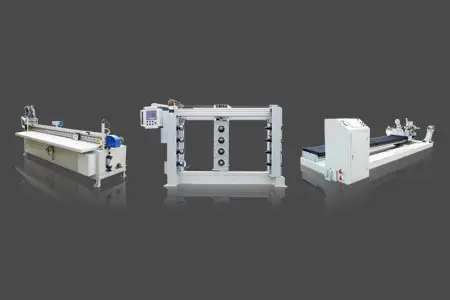
ProductDedicated to the research and development and manufacturing of carbon fiber product equipment
-
BlogUnderstand real-time dynamics and gain a competitive edge in my industry

Dry goods analysis: understand the performance characteristics of winding equipment in one minute
Publication Time:
2022-08-15 17:37
Source:
Wrapping equipment is packaging machinery that uses flexible packaging materials to wrap the entire or part of the package. According to the degree of wrapping, wrapping equipment can be divided into:
Fully wrapped wrapping machines. Including knotted, covered, close-fitting, and seamed wrapping machines. Semi-wrapped wrapping machines. Including folding, shrinking, stretching, and wrapping machines. Wrapping machines can be divided into the following structures: pallet wrapping machines, pallet-less wrapping machines, horizontal wrapping machines, cantilever wrapping machines, ring wrapping machines, drum wrapping machines, and steel strip wrapping machines. Wrapping machines are classified according to their degree of automation: fully automatic wrapping machines, semi-automatic wrapping machines, and manual wrapping machines. Wrapping machines can be divided into pre-stretch, resistance stretch, and mechanical pre-stretch according to the film frame structure. The current mainstream products in the market are pallet wrapping machines, pallet-less wrapping machines, and pre-stretch wrapping machines.

What are the performance characteristics of wrapping equipment? Let's analyze it together.
Slow start and stop of the turntable to prevent the goods from falling instantly, pulling the film frame to make the packaging tighter and closer, and locally reinforcing the required parts to make the packaging better. The film spacing of the wrapping equipment is adjustable, making the packaging material more economical. The turntable is reset to ensure accurate positioning during transportation. Photoelectric height measurement can automatically sense the height of the package, and the number of wrapping layers at the bottom and top and the number of packaging times are easy to adjust. Overload protection is safe and reliable, easy to maintain, and easy to operate, suitable for factories with two or more floors.
No matter what kind of machine it is, malfunctions are inevitable during use, and we always have to trouble maintenance personnel for repairs, and the machine will break down over time. So how can we extend the service life of wrapping equipment? Let's analyze it together.
1. Wear and tear of wrapping machine components. In order to reduce wear and tear, wear-resistant materials should be used as much as possible on the working parts of the wrapping machine, and the friction resistance should be reduced as much as possible when designing the shape of the mechanical working parts. For example, using high manganese content and rare earth alloy to make soil processing parts, coating the plow wall with wear-resistant materials such as polytetrafluoroethylene, and using a roller plow to change the sliding friction with the soil into rolling friction, etc., relatively reducing the amount of wear and tear.
2. Continuous operation causes damage to components. After a long working time of the winding machine, the wear and tear of each part will inevitably increase, manifested as breakage and peeling of parts. In the manufacturing process of the winding machine, the brightness of the surface of the parts is improved, and a relatively gentle segmented filtering is used to reduce the stress concentration of the parts. In addition, using methods such as carburizing and quenching to further improve the hardness, toughness, and wear resistance of the parts can also achieve good results.
3. Lubricate the components. In order to prevent corrosion of the winding machine parts, corrosion-resistant materials such as nickel, chromium, and zinc are often plated on the surface of the metal parts of the winding machine, or oil is applied to the surface of the metal parts, and rust-proof paint is applied to the surface of the non-metal parts to avoid direct contact between the parts and harmful media. By improving the brightness of the parts, the potential difference of the parts can also be reduced. This is generally completed directly during production, because for such metal parts, we need to add lubrication after using them for a period of time, so that the lubricity of the parts can be increased, and the work can be better.
Related News
How to choose a suitable carbon fiber equipment manufacturer
Learn how to select a suitable carbon fiber equipment manufacturer to improve production efficiency and achieve economic benefits.
Market analysis of carbon fiber equipment in the technology manufacturing industry
Carbon fiber products and equipment play a significant role in the technology manufacturing industry. This article will conduct an in-depth analysis of the market conditions of carbon fiber equipment in the technology manufacturing industry and discuss its development trends. With the widespread application of carbon fiber products, the demand for the carbon fiber equipment market is constantly growing. However, market competition is fierce, and enterprises need to enhance their competitiveness through technological innovation and brand promotion. At the same time, the continuous innovation of carbon fiber equipment technology provides more possibilities for the development of carbon fiber products.
Prospects and development trends of carbon fiber product equipment manufacturing
To learn more about the prospects and development trends of carbon fiber product equipment, please read the detailed content of this article.
Focusing on carbon fiber equipment, Weihai Yafeida leads the technological manufacturing industry
Weihai Yafeida leads the technological manufacturing industry, winning market recognition with its advanced carbon fiber equipment. As a leader in the field, they continuously innovate and develop products to meet customer needs. Weihai Yafeida boasts advanced production equipment and process technology, focusing on cooperation and communication with customers, and providing various after-sales services. In the future, they will continue to lead the development of the technological manufacturing industry and provide customers with better carbon fiber equipment.
High-quality carbon fiber equipment manufacturer, Weihai Yafeida at your service
Weihai Yafeida is a leading enterprise specializing in the manufacturing of carbon fiber equipment, providing high-quality customized solutions for customers. They possess advanced production processes and a technical team, and focus on innovation and quality control. Compared to other competitors, Weihai Yafeida has profound expertise and experience in the field of carbon fiber materials. Their professional team will provide customers with various support and services to ensure the smooth progress of projects. Contact Weihai Yafeida immediately to enjoy high-quality carbon fiber equipment manufacturing services!
Innovative technology leads the carbon fiber equipment manufacturing industry
Carbon fiber equipment plays a significant role in modern industry, and with continuous technological innovation and development, it is constantly leading new trends. This article will introduce relevant information about carbon fiber equipment and discuss its applications and prospects in innovative technologies.
Contact Number
Address
Yujiazhuang Industrial Park, Yangting Town, Huancui District, Weihai City, Shandong Province

Manager Ma:
Manager Zhang:
E-mail:
在线客服添加返回顶部
页面顺滑的滚动
右侧在线客服样式 1,2,3 3
图片alt标题设置: Weihai Yafeida Machinery Technology Co., Ltd.
表单验证提示文本: Content cannot be empty!
循环体没有内容时: Sorry, no matching items found.
CSS / JS 文件放置地