

-
About UsLocated in Weihai, a beautiful coastal city, Yafeida is a diversified technology company engaged in the production, manufacturing, and R&D services of carbon fiber equipment in China.

-
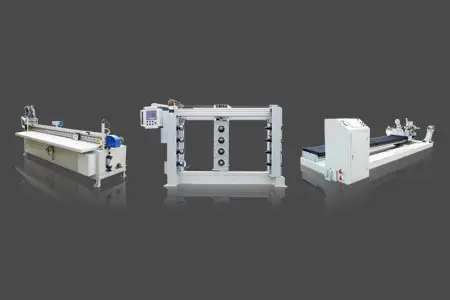
ProductDedicated to the research and development and manufacturing of carbon fiber product equipment
-
BlogUnderstand real-time dynamics and gain a competitive edge in my industry

Domestic carbon fiber is in short supply, presenting an opportunity for accelerated import substitution.
Publication Time:
2021-06-30 14:50
Source:

1. Analysis of Carbon Fiber Market Demand
Carbon fiber is an inorganic fiber with a carbon content higher than 90%, formed by the pyrolysis and carbonization of organic fibers at temperatures above 1,000℃. It not only possesses the inherent properties of carbon materials but also the softness and processability of textile fibers, making it a new generation of reinforcing fiber. Carbon fiber is black, lightweight, high-strength, and possesses many reliable properties such as easy molding, corrosion resistance, and high-temperature resistance. It has been widely used in aerospace, wind turbine blades, sports and leisure, pressure vessels, carbon/carbon composites, and transportation construction, among other fields.
Since 2019, with the rapid growth in demand from downstream sectors such as wind turbine blades, and the increased difficulty in importing carbon fiber from abroad due to the 2020 pandemic, the demand for carbon fiber in the domestic market has expanded rapidly. Currently, the domestic market is experiencing a supply shortage.
In 2020, China's carbon fiber demand reached 48,800 tons, a 29% increase compared to 2019. The year-on-year growth rate of domestic carbon fiber demand in 2020 was significantly higher than the global year-on-year growth rate. This is mainly due to the significant increase in global demand for carbon fiber in wind turbine blades, coupled with the shift of international wind turbine blade outsourcing from Europe to China, resulting in an increase in domestic demand in this sector from 13,800 tons in 2019 to 20,000 tons in 2020, a 45% increase. On the other hand, due to the significant difference between the domestic and global demand structures, the proportion of demand in the domestic civil aviation sector is much smaller than that in the global civil aviation sector, accounting for only about 3% of total domestic demand in 2020. Therefore, the negative impact of the pandemic on domestic carbon fiber demand was relatively small.
In 2020, among the domestic carbon fiber demand, the supply of imported carbon fiber was 30,400 tons, accounting for 62% of the demand; the supply of domestically produced carbon fiber was 18,400 tons, accounting for 38% of the demand. The domestic share increased by 6 percentage points compared to 32% in 2019, indicating a clear trend of domestic substitution. The main reasons are the increased difficulty in importing carbon fiber due to the pandemic, and the tightening of supply to China by major carbon fiber producing countries such as Japan and the United States, leading to an increased gap in domestic demand. Affected by this, the supply of domestically produced carbon fiber in 2020 increased by 53% compared to the 12,000 tons supplied in 2019, with the domestic carbon fiber industry maintaining rapid growth. Currently, the supply of imported carbon fiber is still significantly higher than the domestic supply, and there is huge potential for domestic substitution.
Relevant Report: Beijing Puhua Youce Information Consulting Co., Ltd. "2021-2027 Carbon Fiber Industry Chain Panorama Research and Development Trend and Prospect Forecast Report"
Analysis of China's Carbon Fiber Industry Demand from 2016 to 2020

2. Future Development Trends of China's Carbon Fiber Manufacturing Industry
(1) Since 2020, the domestic market has accelerated import substitution, and there is a shortage of domestically produced carbon fiber.
For a long time, the supply of imported carbon fiber in the domestic market has far exceeded that of domestically produced carbon fiber. Since 2020, affected by the global COVID-19 pandemic, global trade has been significantly impacted, and the difficulty of exporting carbon fiber from abroad to China has increased, resulting in an overall shortage of carbon fiber in the domestic market. Since the second half of 2020, Japan and the United States have strengthened policy controls on the export of carbon fiber to China, further increasing the difficulty of foreign supply. On December 22, 2020, because a subsidiary of Toray Industries in Japan exported carbon fiber to Chinese companies that had not obtained permission under Japan's Foreign Exchange and Foreign Trade Act, the Japanese Ministry of Economy, Trade and Industry issued an administrative guidance warning to the company, requiring Toray Industries to prevent such incidents from happening again and to thoroughly manage its exports. On February 24, 2021, US President Biden signed an executive order launching a 100-day review across federal agencies to address vulnerabilities in the supply chains of four key products, including carbon fiber, with the main goal of enhancing supply chain resilience to protect the United States from future shortages of key products.
In the face of this new situation, domestically produced carbon fiber is in a period of accelerated import substitution. However, on the other hand, due to the gap between the overall technological level of domestic carbon fiber and that of Japan and the United States, as well as insufficient effective production capacity, there is a risk of insufficient supply of carbon fiber in key domestic sectors.
(2) Rapid growth of domestic carbon fiber, leading companies will gain an advantage in competition.
Compared with the foreign carbon fiber market, domestically produced carbon fiber has long been focused on low-value-added fields such as sports and leisure, facing significant price competition pressure. With the rapid growth in demand for carbon fiber in the wind turbine blade sector since 2019, the demand for domestically produced carbon fiber has increased significantly, and the profit margins of domestic carbon fiber companies have continuously improved. In the future, the application prospects of domestically produced carbon fiber in high value-added fields such as aerospace, pressure vessels, and carbon/carbon composites are broad, and companies with independent intellectual property rights and continuous innovation capabilities will gain an advantage in future competition.
Related News
How to choose a suitable carbon fiber equipment manufacturer
Learn how to select a suitable carbon fiber equipment manufacturer to improve production efficiency and achieve economic benefits.
Market analysis of carbon fiber equipment in the technology manufacturing industry
Carbon fiber products and equipment play a significant role in the technology manufacturing industry. This article will conduct an in-depth analysis of the market conditions of carbon fiber equipment in the technology manufacturing industry and discuss its development trends. With the widespread application of carbon fiber products, the demand for the carbon fiber equipment market is constantly growing. However, market competition is fierce, and enterprises need to enhance their competitiveness through technological innovation and brand promotion. At the same time, the continuous innovation of carbon fiber equipment technology provides more possibilities for the development of carbon fiber products.
Prospects and development trends of carbon fiber product equipment manufacturing
To learn more about the prospects and development trends of carbon fiber product equipment, please read the detailed content of this article.
Focusing on carbon fiber equipment, Weihai Yafeida leads the technological manufacturing industry
Weihai Yafeida leads the technological manufacturing industry, winning market recognition with its advanced carbon fiber equipment. As a leader in the field, they continuously innovate and develop products to meet customer needs. Weihai Yafeida boasts advanced production equipment and process technology, focusing on cooperation and communication with customers, and providing various after-sales services. In the future, they will continue to lead the development of the technological manufacturing industry and provide customers with better carbon fiber equipment.
High-quality carbon fiber equipment manufacturer, Weihai Yafeida at your service
Weihai Yafeida is a leading enterprise specializing in the manufacturing of carbon fiber equipment, providing high-quality customized solutions for customers. They possess advanced production processes and a technical team, and focus on innovation and quality control. Compared to other competitors, Weihai Yafeida has profound expertise and experience in the field of carbon fiber materials. Their professional team will provide customers with various support and services to ensure the smooth progress of projects. Contact Weihai Yafeida immediately to enjoy high-quality carbon fiber equipment manufacturing services!
Innovative technology leads the carbon fiber equipment manufacturing industry
Carbon fiber equipment plays a significant role in modern industry, and with continuous technological innovation and development, it is constantly leading new trends. This article will introduce relevant information about carbon fiber equipment and discuss its applications and prospects in innovative technologies.
Contact Number
Address
Yujiazhuang Industrial Park, Yangting Town, Huancui District, Weihai City, Shandong Province
Manager Ma:
Manager Zhang:
E-mail:
在线客服添加返回顶部
页面顺滑的滚动
右侧在线客服样式 1,2,3 3
图片alt标题设置: Weihai Yafeida Machinery Technology Co., Ltd.
表单验证提示文本: Content cannot be empty!
循环体没有内容时: Sorry, no matching items found.
CSS / JS 文件放置地