

-
About UsLocated in Weihai, a beautiful coastal city, Yafeida is a diversified technology company engaged in the production, manufacturing, and R&D services of carbon fiber equipment in China.

-
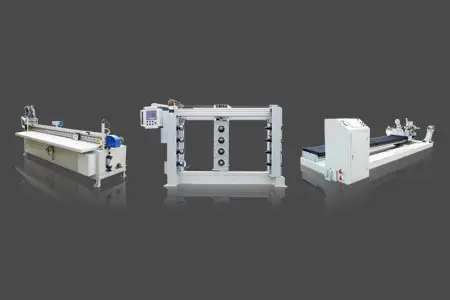
ProductDedicated to the research and development and manufacturing of carbon fiber product equipment
-
BlogUnderstand real-time dynamics and gain a competitive edge in my industry

Why do top sports cars favor carbon fiber materials?
Publication Time:
2021-06-30 15:10
Source:

If you are a true car enthusiast, you must have heard of carbon fiber.
Men love cars, and are even more obsessed with supercars with full carbon fiber bodies; they are the legendary carbon fiber fans.
Major luxury car brands occasionally unveil carbon fiber, attracting people's reverence: the Hennessey Venom F5, McLaren Speedtail, Koenigsegg Agera RS, and Lexus LFA, among other unattainable supercars, all use full carbon fiber bodies, possessing an inherent aura of sportiness and performance that inspires awe. The car's interior decoration and exterior quality upgrades can also be fully showcased with carbon fiber.
What is carbon fiber?
Carbon fiber is a fiber composed of carbon elements. The carbon content of standard modulus carbon fiber is over 90%, while high-modulus carbon fiber is almost 100% carbon. The main element besides carbon is nitrogen.
It is made by stacking flaky graphite microcrystals and other organic fibers along the fiber axial direction, followed by carbonization and graphitization. In other words, it is an inorganic material entirely manufactured through artificial intervention.
Why do supercars favor carbon fiber?
In 2010, BMW used carbon fiber in the i3 and i8, marking the beginning of carbon fiber's application in automobiles. Since then, carbon fiber has been gradually used in car frames, seats, engine hoods, drive shafts, rearview mirrors, and other parts of the car body. So why do supercars prefer carbon fiber? The main reasons are as follows:
1. Lightweight: The biggest advantage of carbon fiber is its lightness, with a density generally ranging from 1400 to 2000 kg per cubic meter. It weighs 3/4 less than steel and 1/3 less than aluminum, making it an ideal material for lightweight car manufacturing.
Generally speaking, a 10% reduction in vehicle weight leads to a 6-8% reduction in fuel consumption, a 5-6% reduction in emissions, an 8-10% improvement in 0-100 km/h acceleration, and a 2-7m reduction in braking distance. The most direct impact is the improvement in energy efficiency, acceleration, and braking performance.
2. Stability: Lightweight car bodies lower the center of gravity of the entire vehicle, improving handling stability and making the vehicle safer and more stable.
3. Safety: Carbon fiber also has a good energy absorption rate. Its energy absorption capacity in collisions is six to seven times that of steel and three to four times that of aluminum, further ensuring vehicle safety.
4. Reliability: Carbon fiber composite materials have higher fatigue strength. The fatigue strength of steel and aluminum is 30-50% of their tensile strength, while that of carbon fiber composite materials can reach 70-80%. This reduces the safety risks associated with lightweighting while maintaining strength and safety.
5. Extended Lifespan: Some car parts require corrosion resistance and must withstand high temperatures, low temperatures, and smoke. Ordinary metal parts cannot guarantee a long lifespan under various conditions. Carbon fiber does not corrode or rust, thus enhancing the lifespan of car parts.
6. High-end Luxury: Using carbon fiber for the body and interior creates a simple yet technologically advanced look with strong three-dimensionality and high transparency. It transcends the plastic texture, elevating the car's image, and exudes a unique sporty aura and noble temperament.
Given the numerous advantages of carbon fiber in the automotive field, why isn't carbon fiber more widely used in car manufacturing?
This is due to the extremely high price of carbon fiber.
Why is carbon fiber so expensive?
1. High Production Cost of Carbon Fiber
Carbon fiber production is an extremely complex process. From raw fiber preparation to pre-oxidation, carbonization, graphitization, sizing, and packaging, each step has high requirements and needs precise control. The demand for multiple pieces of equipment is high. The high initial equipment investment and maintenance costs are one of the reasons for the high price of carbon fiber.
In particular, the later carbonization and graphitization require very high temperatures, and the high energy consumption of the production process is another reason for the high cost of carbon fiber.
2. High Cost of Carbon Fiber Raw Materials
Carbon fiber is "woven." However, differences in additives, weaving methods, etc., among manufacturers lead to variations in the properties of carbon fiber.
The raw materials used to "weave" carbon fiber require high reinforcement, densification, and purification. Due to the high manufacturing cost, the price of raw materials remains high.
3. Technological Blockade and Market Monopoly
As a new material, carbon fiber has very high manufacturing costs and requirements.
Japan and the United States are leaders in carbon fiber technology. Japan is the world's largest producer of carbon fiber, accounting for half of the world's production capacity. Because developed countries like Japan and the United States still control the core technologies of high-end products, production capacity is limited, and demand is increasing, resulting in high carbon fiber prices.
What other fields does carbon fiber apply to?
1. Aerospace
It is desirable to make aircraft engines as light as possible, so minimizing material density as much as possible, given the conditions, is a good approach.
Due to its low density, high strength, and strong fatigue resistance, carbon fiber is widely used in the aerospace field. For example, carbon fiber can be used to manufacture rocket fuel tanks and aircraft fuselages. In particular, the use of carbon fiber in advanced civil airliners has exceeded 50%.
2. Sports and Leisure
Many car manufacturers have produced Olympic sleds, with BMW being one of the most prominent. In 2014, BMW DesignworksUSA designed a carbon fiber sled for the US team competing in the Sochi Winter Olympics.
3. Drones
DJI's high-end "Inspire" series of consumer drones use an aluminum alloy + carbon fiber body, with a maximum flight speed of 96 km/h and support for 5.2K lossless video recording, making them a luxury purchase.
4. Building Applications
Mainly used for reinforcement of buildings and bridges, main structures of artistic buildings, construction machinery, bridges, earthquake-resistant buildings, and pipelines.
5. Marine Field
Currently, the demand for carbon fiber in the marine field mainly includes: racing boats, super luxury yachts, high-speed passenger ships, and military vessels.
6. Rail Transit Applications
Reducing the weight of rail transit significantly reduces the construction cost of tracks. Due to the significant economic benefits of lightweight rail transit, carbon fiber composite materials have enormous development potential.
Related News
How to choose a suitable carbon fiber equipment manufacturer
Learn how to select a suitable carbon fiber equipment manufacturer to improve production efficiency and achieve economic benefits.
Market analysis of carbon fiber equipment in the technology manufacturing industry
Carbon fiber products and equipment play a significant role in the technology manufacturing industry. This article will conduct an in-depth analysis of the market conditions of carbon fiber equipment in the technology manufacturing industry and discuss its development trends. With the widespread application of carbon fiber products, the demand for the carbon fiber equipment market is constantly growing. However, market competition is fierce, and enterprises need to enhance their competitiveness through technological innovation and brand promotion. At the same time, the continuous innovation of carbon fiber equipment technology provides more possibilities for the development of carbon fiber products.
Prospects and development trends of carbon fiber product equipment manufacturing
To learn more about the prospects and development trends of carbon fiber product equipment, please read the detailed content of this article.
Focusing on carbon fiber equipment, Weihai Yafeida leads the technological manufacturing industry
Weihai Yafeida leads the technological manufacturing industry, winning market recognition with its advanced carbon fiber equipment. As a leader in the field, they continuously innovate and develop products to meet customer needs. Weihai Yafeida boasts advanced production equipment and process technology, focusing on cooperation and communication with customers, and providing various after-sales services. In the future, they will continue to lead the development of the technological manufacturing industry and provide customers with better carbon fiber equipment.
High-quality carbon fiber equipment manufacturer, Weihai Yafeida at your service
Weihai Yafeida is a leading enterprise specializing in the manufacturing of carbon fiber equipment, providing high-quality customized solutions for customers. They possess advanced production processes and a technical team, and focus on innovation and quality control. Compared to other competitors, Weihai Yafeida has profound expertise and experience in the field of carbon fiber materials. Their professional team will provide customers with various support and services to ensure the smooth progress of projects. Contact Weihai Yafeida immediately to enjoy high-quality carbon fiber equipment manufacturing services!
Innovative technology leads the carbon fiber equipment manufacturing industry
Carbon fiber equipment plays a significant role in modern industry, and with continuous technological innovation and development, it is constantly leading new trends. This article will introduce relevant information about carbon fiber equipment and discuss its applications and prospects in innovative technologies.
Contact Number
Address
Yujiazhuang Industrial Park, Yangting Town, Huancui District, Weihai City, Shandong Province
Manager Ma:
Manager Zhang:
E-mail:
在线客服添加返回顶部
页面顺滑的滚动
右侧在线客服样式 1,2,3 3
图片alt标题设置: Weihai Yafeida Machinery Technology Co., Ltd.
表单验证提示文本: Content cannot be empty!
循环体没有内容时: Sorry, no matching items found.
CSS / JS 文件放置地