

-
About UsLocated in Weihai, a beautiful coastal city, Yafeida is a diversified technology company engaged in the production, manufacturing, and R&D services of carbon fiber equipment in China.

-
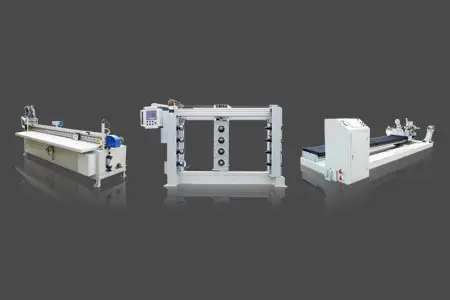
ProductDedicated to the research and development and manufacturing of carbon fiber product equipment
-
BlogUnderstand real-time dynamics and gain a competitive edge in my industry

Carbon Fiber Unveiled: Enabling Lightweight Cars, High Cost Remains the Biggest Obstacle
Publication Time:
2021-06-30 15:31
Source:

On December 15th, NIO held a significant event at the Shanghai Oriental Sports Center, launching its second mass-produced model, the ES6, which attracted widespread attention. Notably, the ES6, based on an aluminum body, incorporates an additional carbon fiber panel of approximately 2 square meters, making it the only model in its class to utilize an aluminum alloy + carbon fiber reinforced composite body structure.
The carbon fiber rear floor bears most of the key loads at the rear of the vehicle. The three major components of the NIO ES6—the carbon fiber rear floor assembly, the carbon fiber seat panel assembly, and the carbon fiber rear floor beam assembly—were jointly designed by Kangdexin Europe Automotive Lightweight Design Center and NIO.
An analyst from Oriental Securities stated that reducing a vehicle's weight by 10% can improve fuel efficiency by 6%-8%, and reducing the weight by 100 kilograms can decrease fuel consumption per 100 kilometers by 0.3-0.6 liters. As a primary approach to energy conservation and emission reduction in automobiles, lightweight design has been incorporated into energy-efficient vehicle standards.
Carbon fiber reinforced composites, known as "black gold," are becoming increasingly popular as lightweight materials due to their lightweight nature, high design freedom, and strong integration capabilities.
Weight reduction of over 30%
According to the introduction, the use of a carbon fiber rear floor in the ES6 model enhances the overall torsional stiffness of the body, improves passive safety performance, and significantly improves overall durability. Furthermore, the carbon fiber rear floor embedded in the all-aluminum body is over 30% lighter than aluminum alloy and weighs only 1/5 of high-strength steel of the same volume.
Public information shows that carbon fiber is a new type of fiber material with a carbon content of over 95%, characterized by high strength and high modulus. Its strength is more than twice that of ultra-high-strength steel, 30% lighter than aluminum, and 50% lighter than steel. Its strength is 7-9 times that of steel, making it known as the "king of lightweight materials."
"Weight reduction is a crucial direction for the future development of automobiles." Zhang Dingjin, former chairman and expert of China Composites Group Co., Ltd., stated in an interview with the Economic Observer reporter that carbon fiber has significant advantages in terms of modulus and density, and replacing steel can reduce weight by over 40%.
While reducing weight, automobiles need to consider the stress and impact resistance of components to ensure safety.
"During a collision, the energy absorption capacity of carbon fiber composite materials is 4-5 times that of steel, allowing for weight reduction while enhancing the collision safety performance of the vehicle." Shen Zhen, an honorary council member of the China Composites Society who has long been engaged in carbon fiber research, said in response to a question from the Economic Observer reporter.
Application Acceleration
The application of carbon fiber reinforced composites in the automotive field began with racing cars and has rapidly expanded to civilian vehicles in recent years. As an important lightweight material for automobiles, its application range is expanding from interior decoration to exterior parts, body, and structure.
BMW Group is a pioneer in the application of carbon fiber reinforced composites in large-scale automotive production. In 2011, BMW unveiled the i3 electric concept car and the i8 hybrid concept sports car at the Frankfurt Motor Show. In 2014, the i3 was successfully commercialized, marking a step forward in the commercialization and popularization of carbon fiber products in the automotive industry.
Zhang Dingjin introduced that major global carbon fiber producers and major automakers have formed alliances to pursue common development. "For example, Audi with Germany's Voith, Mercedes-Benz and Toyota with Japan's Toray, and General Motors with Japan's Teijin Tōbō, etc."
Several industry insiders interviewed by the Economic Observer reporter indicated that compared to foreign giants, domestic automakers are still in the initial stages of development and small-scale application in the field of carbon fiber.
"Currently, a considerable number of domestic automakers and carbon fiber composite material companies are accelerating their layout in the field of automotive carbon fiber materials." Shen Zhen introduced.
On June 30, 2018, the first model of Future Mobility—the Future K50—officially went into mass production at the Future Mobility Suzhou production base. Notably, the car's body is entirely made of carbon fiber material, using 29 carbon fiber composite exterior parts, with a total weight reduction of over 40% compared to traditional steel materials.
Information from Kangde Composite Materials shows that the carbon fiber lightweighting industry platform jointly built by Kangde Group and Kangdexin Group has engaged in exchanges and cooperation with nearly 60 automakers. It has completed several automotive carbon fiber composite lightweighting projects for body panels and structural parts. Partner automakers include BAIC Group, NIO, SAIC Motor, Changan Automobile, Geely Automobile, Great Wall Motor, and WM Motor.
Challenges to be Addressed
Shen Zhen stated that automotive carbon fiber lightweighting is a major trend in the future development of automotive lightweighting, but the current lack of an industrial chain for low-cost carbon fiber and its intermediate materials, as well as issues related to carbon fiber vehicle repair, are challenges that need to be addressed. "The high cost is the biggest obstacle."
"Companies assess costs comprehensively. Although the cost of carbon fiber materials is higher than that of steel and aluminum alloys, energy consumption and maintenance costs are reduced, thus lowering the total life-cycle cost." According to He Peng, from a material cost perspective alone, the material cost of the ES6 is controlled within 300 yuan/kg, while the cost of using aluminum alloy materials under the same conditions is approximately 60-100 yuan.
"Although almost all automobile companies in China have formulated development plans for carbon fiber reinforced composites and established alliances with carbon fiber companies, some development bottlenecks still exist, such as: a lack of design guidelines, evaluation standards, and databases for composite vehicle and component design; a lack of automated mass production technology and equipment for composite components, etc." Yu Muhuo, a professor at Donghua University and chief scientist of the National 973 Project, previously said in an interview with the Economic Observer reporter.
In the interview, the Economic Observer reporter learned that more than one industry expert held the same view.
Zhao Wei, a teacher at the School of Materials Science and Engineering, Liaocheng University, who has long been researching carbon fiber composites, said: "In the industrial field, there is no unified system, no mature manufacturing processes and equipment, which directly leads to the inability to reduce costs, and the theoretical mass production is actually just a concept."
In Zhang Dingjin's view, the challenge for domestic automobiles adopting carbon fiber composite materials is first to address the issue of concept. "Composite materials should not be simply considered as substitutes for metal materials. The focus should be on establishing a systematic solution for the application of carbon fiber composite materials in automobiles, forming an application concept that reduces the total life-cycle cost."
Secondly, a tripartite strategic partnership should be established among carbon fiber manufacturers, carbon fiber composite material suppliers, and automobile manufacturers to jointly develop carbon fiber automotive parts, establish and improve the design data and testing methods for carbon fiber reinforced composite automotive parts, and develop low-cost carbon fiber materials.
Related News
How to choose a suitable carbon fiber equipment manufacturer
Learn how to select a suitable carbon fiber equipment manufacturer to improve production efficiency and achieve economic benefits.
Market analysis of carbon fiber equipment in the technology manufacturing industry
Carbon fiber products and equipment play a significant role in the technology manufacturing industry. This article will conduct an in-depth analysis of the market conditions of carbon fiber equipment in the technology manufacturing industry and discuss its development trends. With the widespread application of carbon fiber products, the demand for the carbon fiber equipment market is constantly growing. However, market competition is fierce, and enterprises need to enhance their competitiveness through technological innovation and brand promotion. At the same time, the continuous innovation of carbon fiber equipment technology provides more possibilities for the development of carbon fiber products.
Prospects and development trends of carbon fiber product equipment manufacturing
To learn more about the prospects and development trends of carbon fiber product equipment, please read the detailed content of this article.
Focusing on carbon fiber equipment, Weihai Yafeida leads the technological manufacturing industry
Weihai Yafeida leads the technological manufacturing industry, winning market recognition with its advanced carbon fiber equipment. As a leader in the field, they continuously innovate and develop products to meet customer needs. Weihai Yafeida boasts advanced production equipment and process technology, focusing on cooperation and communication with customers, and providing various after-sales services. In the future, they will continue to lead the development of the technological manufacturing industry and provide customers with better carbon fiber equipment.
High-quality carbon fiber equipment manufacturer, Weihai Yafeida at your service
Weihai Yafeida is a leading enterprise specializing in the manufacturing of carbon fiber equipment, providing high-quality customized solutions for customers. They possess advanced production processes and a technical team, and focus on innovation and quality control. Compared to other competitors, Weihai Yafeida has profound expertise and experience in the field of carbon fiber materials. Their professional team will provide customers with various support and services to ensure the smooth progress of projects. Contact Weihai Yafeida immediately to enjoy high-quality carbon fiber equipment manufacturing services!
Innovative technology leads the carbon fiber equipment manufacturing industry
Carbon fiber equipment plays a significant role in modern industry, and with continuous technological innovation and development, it is constantly leading new trends. This article will introduce relevant information about carbon fiber equipment and discuss its applications and prospects in innovative technologies.
Contact Number
Address
Yujiazhuang Industrial Park, Yangting Town, Huancui District, Weihai City, Shandong Province
Manager Ma:
Manager Zhang:
E-mail:
在线客服添加返回顶部
页面顺滑的滚动
右侧在线客服样式 1,2,3 3
图片alt标题设置: Weihai Yafeida Machinery Technology Co., Ltd.
表单验证提示文本: Content cannot be empty!
循环体没有内容时: Sorry, no matching items found.
CSS / JS 文件放置地